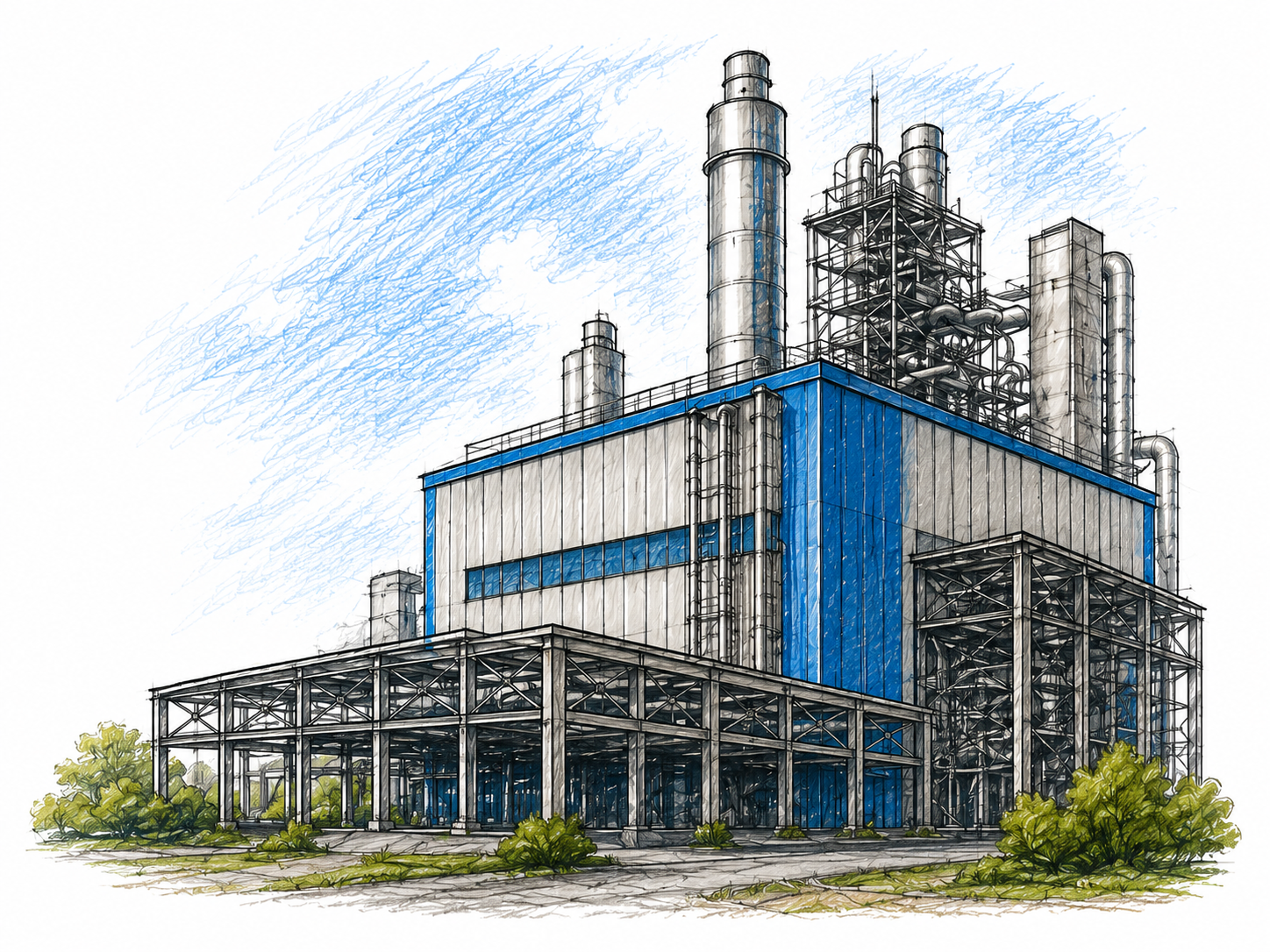
What Is Cementitious Fire Protection?
Passive fire protection systems play a critical role in preserving the structural integrity of buildings during a fire, ensuring the safety of life and property. In the first part of our series, we covered the fundamental principles of passive fire protection. In this instalment, we examine cementitious fire protection solutions — one of the most widely used systems for protecting steel structures.
Cementitious fire protection systems fall under the category of spray-applied fire resistive materials (SFRM). These systems help preserve structural resistance by delaying steel load-bearing elements from reaching critical temperatures during a fire.
How Does Cementitious Fire Insulation Work?
Cementitious fire protection materials generally contain Portland cement or gypsum-based binders as well as perlite, vermiculite, mineral wool and various lightweight aggregates. These materials form a protective layer with low thermal conductivity over the steel surface, delaying the high temperatures generated by fire from reaching the steel section. The material is typically supplied as a dry powder and applied to steel surfaces by mixing with water on site using specialist spray equipment.
Advantages and Limitations
Cementitious fire protection systems are widely preferred worldwide due to their high fire resistance and economic viability. Key advantages: cost-effective solutions, rapid application over large steel areas, fire resistance up to 60, 90, 120, 180 and 240 minutes, widespread use in industrial facilities and commercial buildings. However, these systems also have certain limitations. Due to their spray texture, they do not provide a decorative appearance and are generally preferred above suspended ceilings, in shafts or in concealed areas.
Conclusion
Cementitious fire protection systems have long been trusted for protecting steel structures against fire, offering economical and effective solutions. With the right product selection, appropriate thickness calculations and quality application, the fire resistance of structural elements can be significantly enhanced. In the third and final part of our series, we will share detailed information about intumescent fire coatings — increasingly preferred in architectural projects.