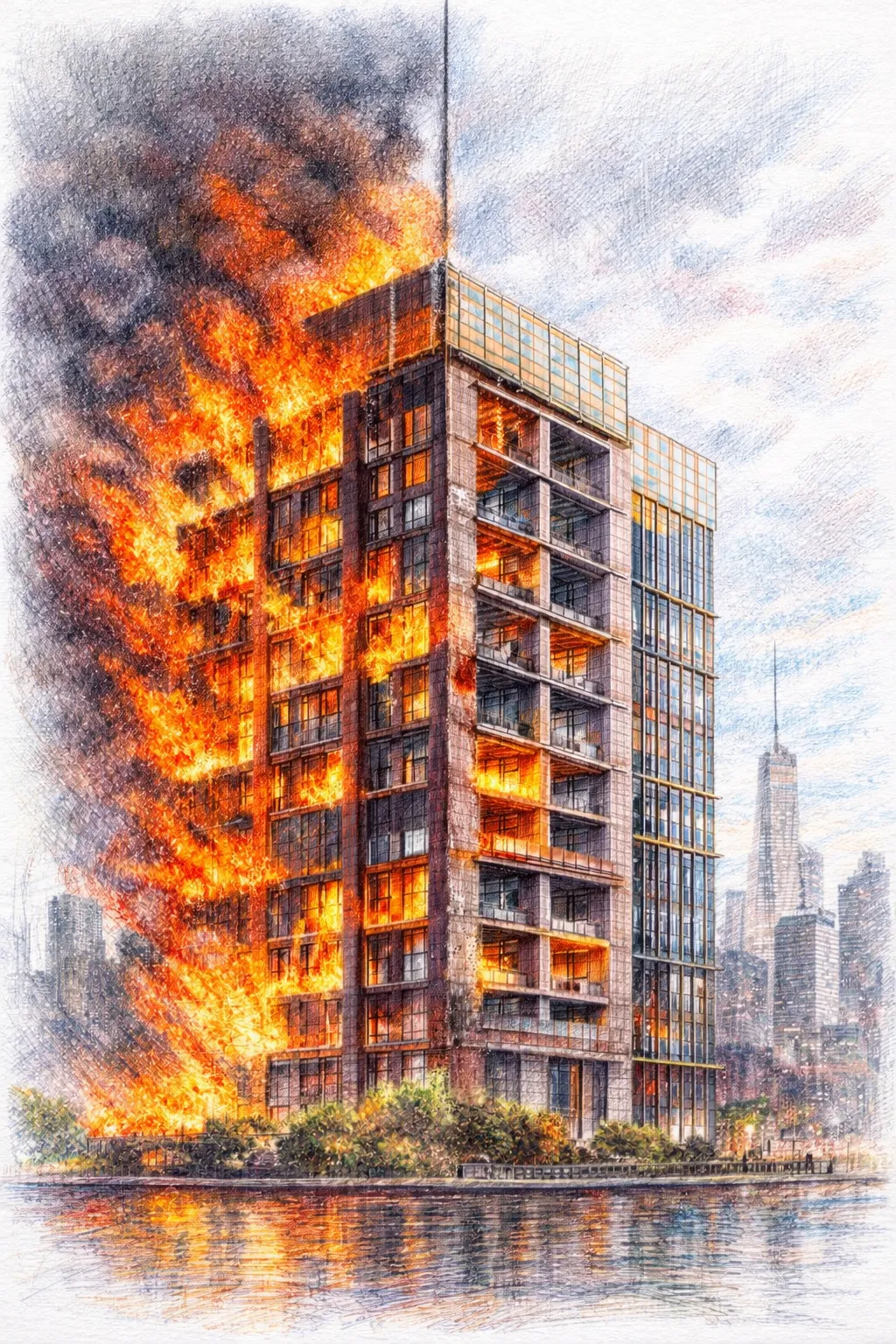
An active fire protection system requires triggering (action) or an alarm to function (for example, a sprinkler system), whereas passive fire protection is generally classified as coatings or coating arrangements or free-standing systems that will provide thermal protection in the event of a fire.
In this article, we will focus on fire-resistant coatings — one aspect of passive fire protection — and examine the advantages and disadvantages of various types to help you determine the best option for your next construction project.
What Is Fire-Resistant Coating? Fire-resistant coatings are considered the lightest form of passive fire insulation. Because fire-resistant coatings are intumescent, when exposed to heat, the intumescent coating expands rapidly and extends up to a hundred times its original thickness, forming a char-based fire barrier. The barrier obtained slows the heat transfer from the fire to the steel and delays the steel from reaching its critical temperature. This intumescent barrier must remain in place during any movement in the steel — such as expansion or bending — until the required protection criteria are met.
Types of Fire-Resistant Coatings
- Water-Based Fire-Resistant Coating: Water-based systems are generally a more environmentally friendly and less chemically odorous option. They are the most cost-effective systems and produce less odour in the environment during application; however, these coatings are less tolerant of humidity and low temperatures and may take longer to dry completely in such environments.
- Solvent-Based Fire-Resistant Coating: Solvent-based systems are generally used in semi-open environments and have been tested against air and temperature changes. They are more resistant to weather conditions, temperature and humidity changes than water-based coatings. They also dry faster and more consistently and provide a smoother surface.
- Epoxy-Based Fire-Resistant Coating: Epoxy-based systems are generally used in harsher environments such as the marine and chemical industries, as these coatings provide excellent hydrocarbon fire protection. Two-component epoxy-based fire-resistant coatings applied to the surface form a very thick and durable film that insulates the steel and is highly resistant to corrosion.
Hybrid Fire-Resistant Coating In 2014, a new technology emerged in the field of steel fire insulation — the Nullifire SC902 Hybrid Fire-Resistant Coating. This technology was developed to provide faster drying times without requiring multiple coats, while offering the same level of fire protection and ratings.