What Is Passive Fire Protection and Why Is It Important?
Fire safety plays a critical role in the design and operation of modern buildings. Yet passive fire protection (PFP) remains a complex and insufficiently understood topic for many project stakeholders. Correct system selection is of great importance for building safety, especially for architects, engineers, contractors and applicators.
In this three-part series prepared by Firesol, we will cover the fundamental principles of passive fire protection, the materials used, international standards and the importance of correct system selection.
What Is Passive Fire Protection (PFP)?
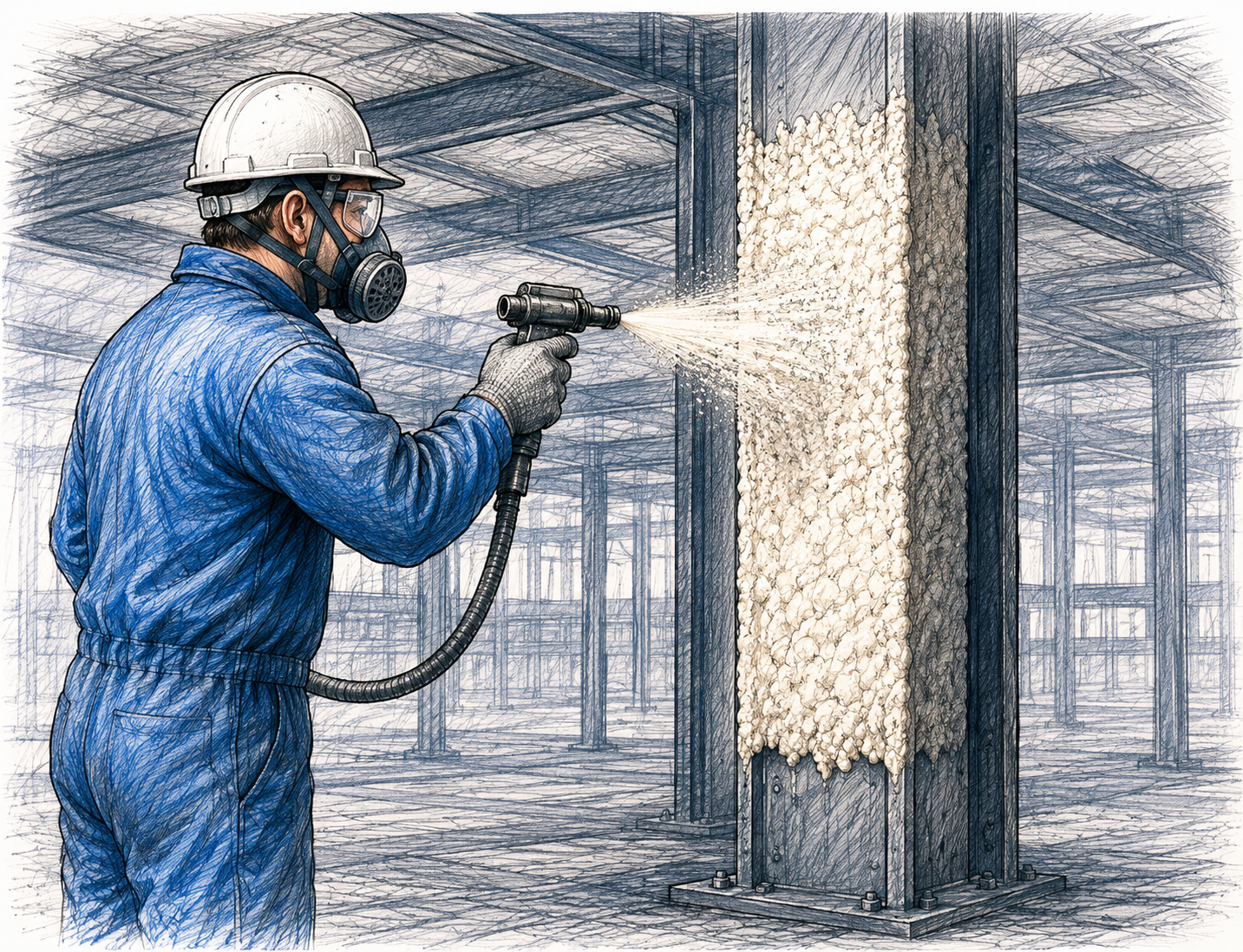
Passive Fire Protection (PFP) is the general term for protective systems applied to enable structural elements to maintain their resistance for a certain period during a fire. These systems delay the high temperatures generated by fire from reaching steel, concrete or other structural elements, ensuring that the building's load-bearing system remains stable. This both buys time for the safe evacuation of building occupants and creates the necessary time for fire-fighting teams to intervene.
Why Is Fire Resistance Critically Important?
Steel structures are indispensable load-bearing elements of the modern construction sector thanks to their high strength. However, one of steel's biggest disadvantages is its rapid loss of mechanical properties at high temperatures. When the steel temperature reaches approximately 593°C, it loses approximately 50% of its load-bearing capacity. As the temperature continues to rise, deformations occur and the load-bearing system faces the risk of collapse. Through fire-resistant coatings, plasters or panel systems, the time for steel to reach its critical temperature is delayed.
Fire Resistance Tests and Standards
Not every fire has the same characteristics. Different test standards have been developed depending on the type of fire, fuel source and rate of temperature rise. Cellulosic fire tests simulate fires encountered in commercial and residential buildings (UL 263, ASTM E119, ISO 834, BS 476, EN 13381). Hydrocarbon fire tests simulate risks in petrochemical plants, refineries and the energy sector (UL 1709, NFPA 290).
Conclusion
Passive fire protection is one of the most important safety layers ensuring that buildings remain standing during a fire. Correctly designed and applied systems both increase life safety and significantly reduce structural damage and economic losses. As Firesol, we offer internationally compliant passive fire protection solutions for your projects.